The Joy of Jesus Bible
What God Has Always Wanted From You
Micah 6:6-8 · longing to fulfillment
Micah had just promised that a king would come out of Bethlehem one day. Now God gave him a harder message, and it sounded like a day in court.
"Stand up," God said, "and argue your case in front of the mountains. Let the hills hear you." (Mountains make a good jury. They have been listening for thousands of years, and they never doze off.)
But the people were not the ones with a complaint. God was, and he sounded more hurt than angry.
"O my people, what have I done to you? How have I worn you out? Answer me!"
The people said nothing, so God reminded them. "I brought you up out of Egypt. I bought you back out of slavery. I sent Moses and Aaron and Miriam to lead you. Remember how King Balak of Moab paid Balaam to curse you, and Balaam blessed you instead. Remember how I brought you across the Jordan. Then you will see how good I have been."
(That was the Balaam whose donkey talked back to him. Nobody forgets a talking donkey.)
The people answered as if God were a shopkeeper and they had to guess his price.
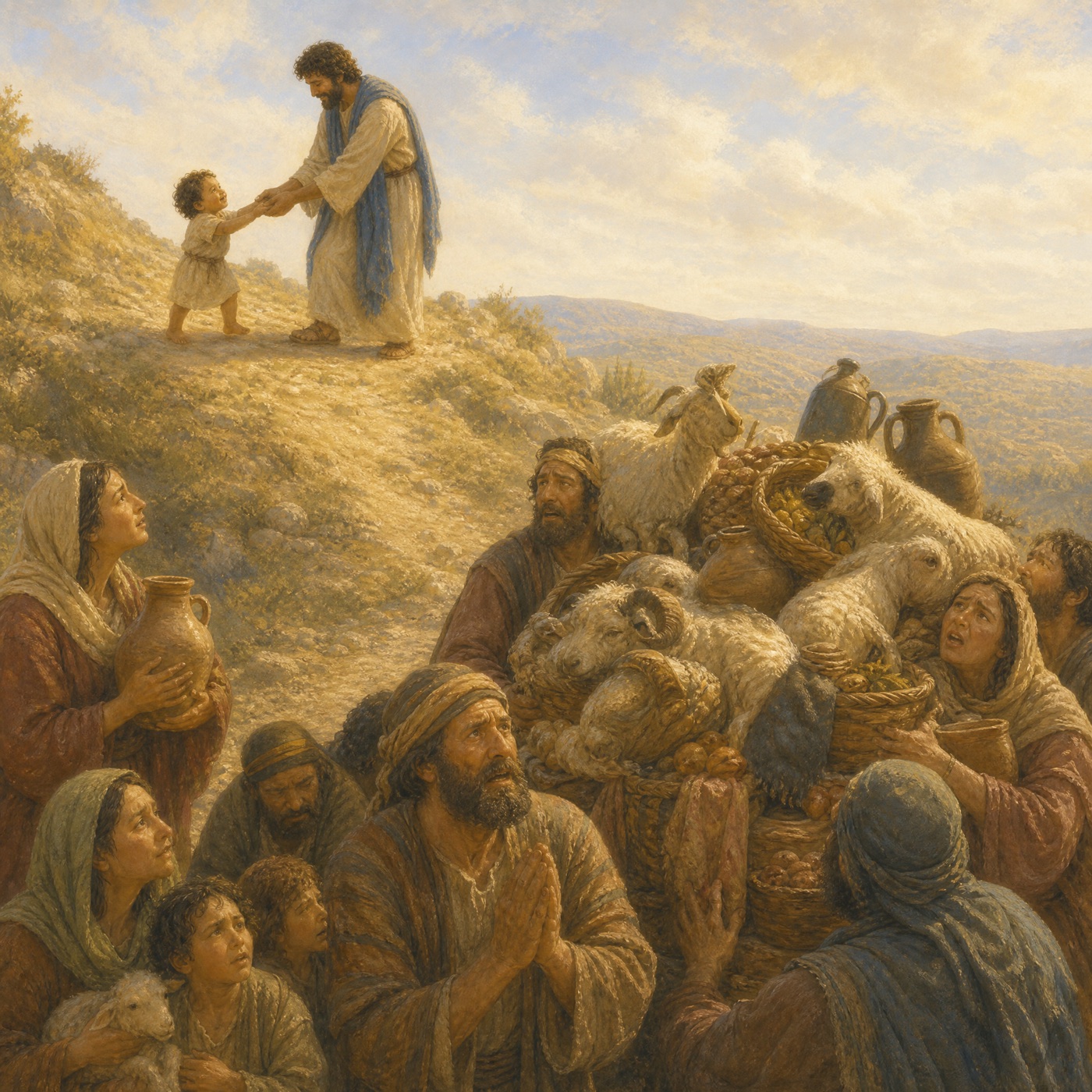
"What should I bring when I come before the LORD? Calves a year old, to burn on the altar?"
"Would he be pleased with a thousand rams? Ten thousand rivers of olive oil?"
(Ten thousand rivers of oil is enough to fry every fish in the sea. They were just stacking up numbers.)
Then came the worst question of all. "Should I give my firstborn child for the wrong I have done?"
That question had a terrible story behind it. In the nations around Israel, people killed their own children as offerings to their gods. Even Ahaz, a king of Judah in Micah's own lifetime, had killed his son that way. God hated it, and in his law he had told his people never to do such a thing.
So Micah gave them the answer they should have known all along:
"He has already shown you what is good.
And what does the LORD ask of you?
To do what is right,
to love mercy,
and to walk humbly with your God."
Calves and oil were no use to God without his people's hearts, and children on an altar he never wanted at all. He wanted his people. Doing right meant fair prices in the market and no cheating the poor. Loving mercy meant being glad to be kind, even to people who did not deserve it. Walking humbly meant knowing that God is great and staying close to him anyway, the way a girl keeps step beside her father on a long road.
But knowing the road is not the same as walking it. Right after that, God pointed at their markets and their crooked scales. The calves kept burning on the altar, and none of them fixed a single heart.
Kings came and went, and prophet after prophet called the people back to that road. But the wrong they had done was still there, and nothing they could carry up the hill would ever take it away.
So God brought the gift himself. He had another firstborn, his one and only Son, and he gave him without being asked. This Son did what was right every day. He loved mercy enough to call a cheating tax collector down from a tree and go home with him for dinner. He walked so close to his Father that he called him "Abba," which means "Dad." Then he carried a cross up a hill and died on it for the wrong his people had done, the one gift that was ever enough.
And to anyone who wanted to walk that road with God, Jesus said, "Follow me."
···