The Joy of Jesus Bible
The Littlest Town Gets the Greatest King
Micah 5:2-5 · upside down kingdom
Nineveh had said sorry once, in Jonah's day,
but it did not stay sorry.
By the time Micah was a prophet in Judah,
the army of Assyria, Nineveh's own country, was marching south,
town after town after town,
and the people of Jerusalem stood on their walls
and watched the enemy tents go up all around them.
"Get your soldiers ready!" Micah told the city.
"We are surrounded.
They will strike Israel's ruler on the cheek with a rod."
A king hit in the face!
A king is not supposed to get hit in the face.
So where would help come from?
God gave Micah a song,
and the song pointed south,
down the road, over the hills,
six miles from Jerusalem,
to Bethlehem.
(Six miles is about two hours of walking for grown-up legs,
and longer if you stop to look at the sheep.)
Bethlehem had barley fields,
sheep on the slopes,
and not much else.
Its name means "house of bread,"
and bread was about the only thing it was famous for.
That, and one boy.
Three hundred years before,
the prophet Samuel had walked into Bethlehem with a horn of oil
and poured it on the head of Jesse's youngest son,
the one the family had left out in the field with the flock.
His name was David.
Now the LORD said through Micah,
"But you, Bethlehem Ephrathah,
too small to count among the clans of Judah,
out of you will come for me
one who will rule over Israel.
His beginnings are from long ago,
from the days of old."
From long ago?
A king not born yet
who was already older than David, older even than Abraham?
Micah did not explain it.
He sang it and let it stand.
Hard years were coming, Micah sang.
God would let his people go for a while,
until a woman in labor
gave birth to a son,
and the scattered brothers came home.
Then the King from Bethlehem would stand up
and shepherd his flock
in the strength of the LORD.
(A shepherd for a king! David would have liked that,
though he might have warned him about the mud.)
His people would live safe,
and his greatness would reach
all the way to the ends of the earth.
"And he will be our peace," Micah sang,
"when the Assyrian comes into our land."
Micah grew old and died,
and no king came out of Bethlehem.
The Assyrians went home,
but Babylon came after them,
and Jerusalem's kings fell one by one.
For seven hundred years
Bethlehem stayed a town of barley and sheep.
Then, in Bethlehem of all places,
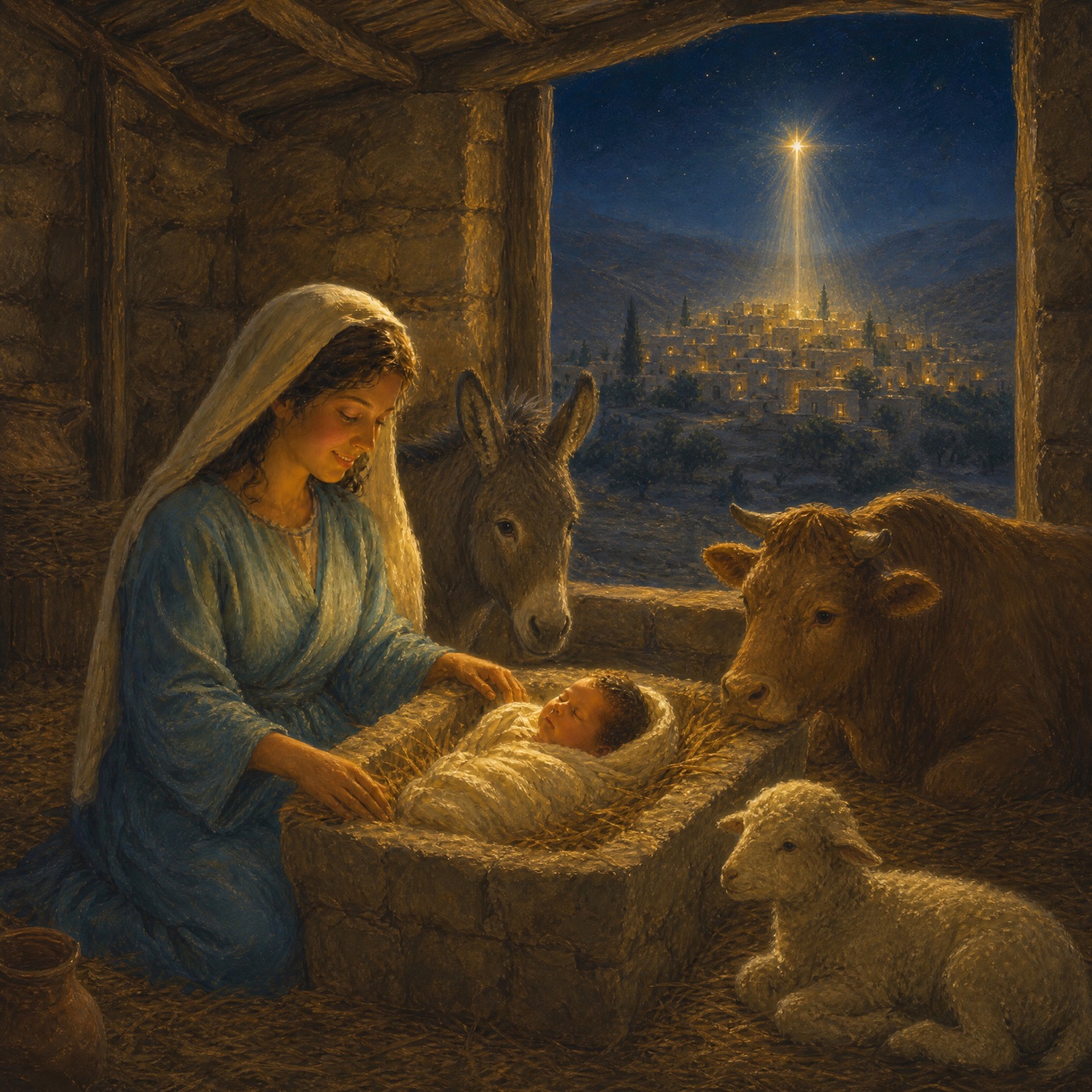
a young mother gave birth to a son,
and shepherds came in from the fields to see him.
When wise men came looking for a newborn king, jealous King Herod asked
where the promised King would be born,
his scholars unrolled Micah's scroll and read it:
"In Bethlehem."
That baby grew up.
He told the people arguing with him in the Temple, "Before Abraham was born, I am."
Soldiers struck him in the face,
the way Micah said a ruler would be struck,
and he did not strike back.
His name was Jesus,
the Shepherd-King from the house of bread,
and he is our peace.
···