The Joy of Jesus Bible
When Helping Made It Worse
Exodus 5-6 · already not yet
The leaders of Israel had bowed down and worshiped when they heard Moses' news. Everyone thought the hard days were nearly over.
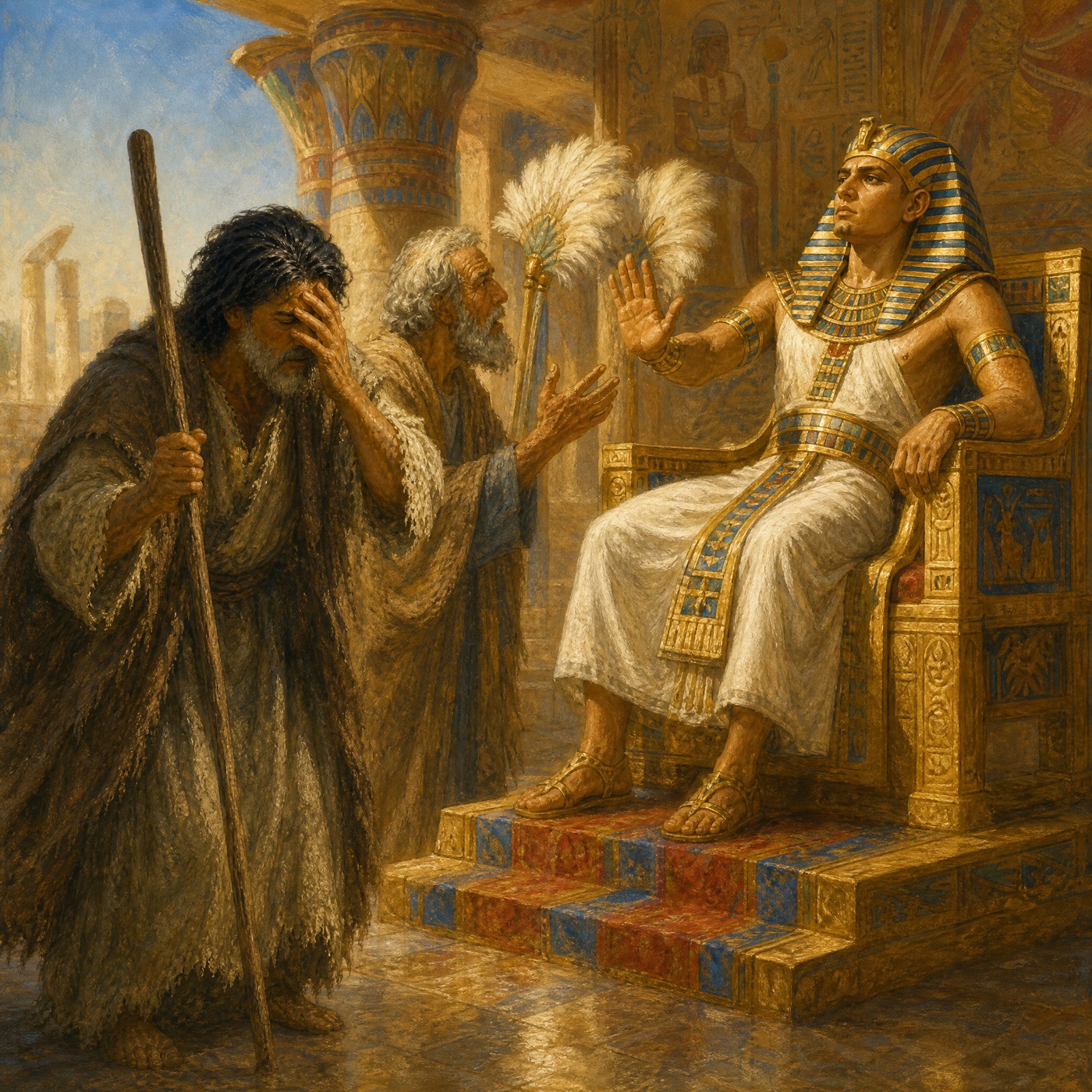
Then Moses and Aaron went to the palace.
"The LORD, the God of Israel, says this," they told Pharaoh. "Let my people go, so they can hold a feast for me in the wilderness."
"Who is the LORD?" said Pharaoh. "Why should I obey him? I do not know the LORD, and I will not let Israel go." (He was about to find out who the LORD was, and he would not enjoy finding out.)
That same day Pharaoh called in his slave drivers. "These people are lazy!" he snapped. "Stop giving them straw for the bricks. Let them find their own. And they must make just as many bricks as before!"
(Egyptian bricks were mud with chopped straw stirred in. Without straw, the bricks cracked and broke apart as they dried.)
So the people of Israel scattered all over Egypt, picking up old stubble from the fields, then hurrying back to stamp the mud. They could not keep up. The slave drivers beat the Israelite foremen, the men in charge of each crew. "Why didn't you make all your bricks yesterday? Or today?"
The foremen went to Pharaoh. "Why are you treating your servants like this? We get no straw, and we are the ones who get beaten!"
"Lazy!" Pharaoh shouted. "You are lazy, lazy! Get back to work."
Outside, Moses and Aaron were waiting. "May the LORD judge you," the foremen said. "You have made us stink in Pharaoh's nose! You have put a sword in his hand to kill us."
Moses went off alone and spoke to God. "Lord, why have you brought trouble on these people? Why did you ever send me? Since I spoke to Pharaoh, he has only been crueler, and you have not rescued your people at all."
"Now you will see what I will do to Pharaoh," God said. "With my strong hand he will drive them out of his land. I am the LORD. I have heard my people groaning, and I remember my promise to Abraham. Tell them: I will bring you out. I will set you free. I will redeem you with an outstretched arm. I will take you as my own people, and I will be your God."
(To redeem means to buy someone back, to pay whatever it costs to set them free.)
Moses told the people. This time they would not even listen. Their spirits were broken, and the work was too hard. "If my own people won't listen to me," Moses said, "why would Pharaoh? I'm no good at speaking!"
God sent him back anyway. (Right there the Bible stops to list Moses' family, name after name, so everyone would know exactly which Moses and Aaron God had sent.)
When God's arm finally moved, Israel would walk out of Egypt free. But Moses could only lead them out of the brickyards. Their grumbling and their sin came right along, packed inside their hearts.
So the prophets kept the promise alive. "The LORD will roll up his sleeve and show his holy arm," Isaiah said.
Many years later another deliverer came, and one dark Friday it looked as if he had only made things worse. His own people turned on him. Soldiers beat him. The leaders laughed at him, "He saved others, but he cannot save himself!" It looked as if God had rescued no one at all.
His arms were stretched out wide on the cross, and there he died, giving his life to buy his people back. On the third day God raised him from the dead. The outstretched arm of the LORD had a name, and his name was Jesus.
···