The Joy of Jesus Bible
Ten Times God Knocked on Pharaoh's Door
Exodus 7-10 · gods heart
Moses was eighty years old when he walked back into Pharaoh's palace, and his brother Aaron was eighty-three. God's people were still scratching for straw, and Pharaoh was still asking, "Who is the LORD, that I should obey him?"
God meant to answer him. "Egypt will know that I am the LORD," he told Moses, "when I stretch out my hand."
Moses met Pharaoh beside the Nile. "The LORD says, 'Let my people go, so that they may worship me.'" Aaron struck the water with his staff, and the great river turned to blood. The fish died, the river stank, and the Egyptians dug along the bank for drinking water. (Egyptians prayed to that river. It could not even keep itself clean.) Pharaoh's magicians copied the trick, and Pharaoh went home.
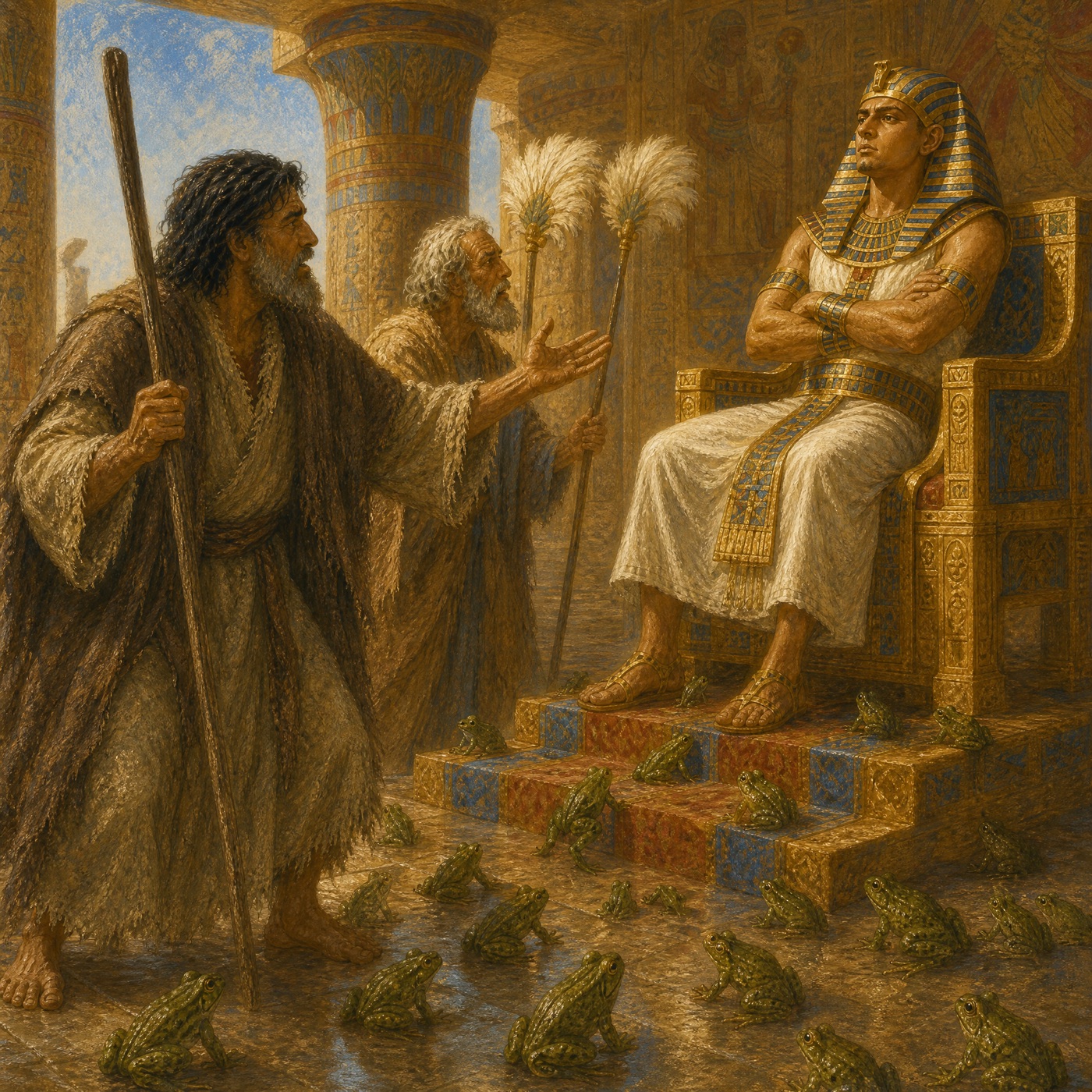
Next came frogs. They hopped out of the river and into the palace, the beds, the ovens, the bread bowls. The magicians made frogs come up too. (More frogs was not the help Pharaoh needed.)
"Pray to the LORD to take them away!" Pharaoh begged. "Then I will let the people go."
"You choose the time," said Moses. "When?"
"Tomorrow," said Pharaoh.
So the king of Egypt spent one more night with frogs on his pillow. The next day they died everywhere, and people shoveled them into stinking heaps. As soon as the frogs were gone, Pharaoh said no.
Aaron struck the dust, and it became gnats. The magicians tried and failed. "This is the finger of God!" they told the king. Pharaoh would not listen.
Flies swarmed everywhere except Goshen, where God's people lived. The Egyptians' cattle died, and not one of Israel's. Sores broke out on everyone, and the magicians had so many they could not even stand in front of Moses. Pharaoh had made his heart hard again and again, and now God hardened it too.
God sent word: "This time I will send hail, so that you will know there is no one like me in all the earth." Officials who believed it hurried their servants and animals indoors. The hail came crashing down with fire running along the ground. People and animals left in the fields were killed, and trees were smashed. In Goshen, not one hailstone fell.
"I have sinned this time!" Pharaoh cried. "The LORD is right, and my people and I are wrong. Pray to the LORD for us!"
Moses spread out his hands, and the hail stopped. Then Pharaoh changed his mind.
Locusts ate every green thing the hail had missed. Then darkness fell, so thick that for three days no Egyptian could see anyone else. But in the homes of God's people there was light.
"Go, then," said Pharaoh. "Take your children. Leave your flocks and herds."
"Not a hoof will be left behind," said Moses. Pharaoh still would not let them go.
Nine times God had answered Pharaoh's question. The river, the sky, the sun: none of Egypt's gods could stand against him. Yet all that power never softened Pharaoh's heart. It only grew harder.
Later God's own people grew hard-hearted too, and God promised through the prophet Ezekiel: "I will take out your heart of stone and give you a heart of flesh."
Long after Ezekiel, someone came who did signs of his own. His first sign turned water into wine for a wedding, not into blood. He touched people's sores and made them well. When he was dying on a cross, darkness covered the land at noon. Then he rose from the dead, and Jesus is still turning hearts of stone into hearts of flesh.
···