The Joy of Jesus Bible
The Quiet Lamb Who Carried Our Wrong
Isaiah 53 · type true and better
(from Isaiah 52:13 to 53:12)
After the song about eagles' wings,
God gave Isaiah a stranger picture to write down,
for a city that kept turning its back on God
and would one day be marched off to Babylon for it.
"Look at my servant," God said.
"He will be lifted up, high and honored.
But first, many will stare at him in shock,
because he will be hurt so badly
he will hardly look like a man."
Then the people in the poem speak.
He grew up like a green shoot
pushing out of dry, cracked ground.
(Think of one weed in a dusty path.
People step right over it.)
He had no crown and no shine,
nothing to make anyone look twice.
He was a man who knew sorrow up close,
and people hid their faces from him.
"We thought God was punishing him," they said.
"We thought he was getting what he deserved."
Then they saw the truth. "It was our sorrows he was carrying.
He was pierced for the wrong things we did.
He was crushed for our sins.
He took the punishment that gives us peace,
and by his wounds we are healed."
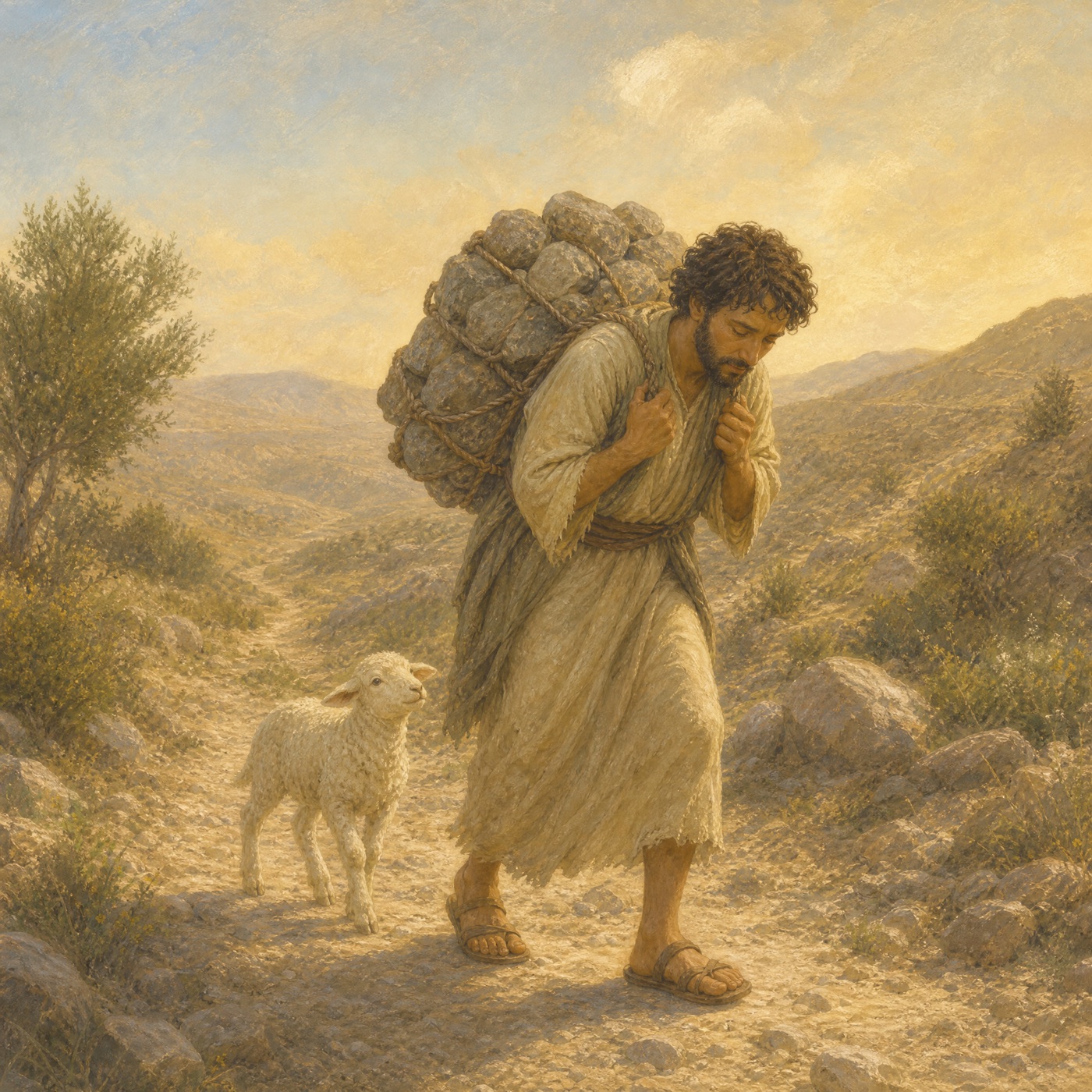
"All of us have wandered off like sheep."
(Sheep are champions at wandering.
One sniff of better grass and off they go,
nose down, until the shepherd is nowhere in sight.)
"Every one of us has gone our own way,
and the LORD has laid on him
the wrong of us all."
They hurt him, and he did not argue.
He did not say one word.
He was like a lamb led away to be killed,
like a sheep that stands still and silent
while the shearer clips off its wool.
(A sheep being sheared sits up on its bottom like a big woolly baby and lets the wool fall away.)
They dragged him off and judged him unfairly.
He was killed,
cut off from the land of the living,
struck down for the sins of God's people.
He was given a grave with wicked men
and a rich man's tomb,
though he had never hurt anyone
or told a single lie.
It was the LORD's own plan for him to be crushed, so that his life could be an offering to take away sin.
And then the poem goes on past the grave.
"He will see his children," God said.
"His days will go on and on.
After all his suffering,
he will look and be satisfied.
My servant, who did no wrong,
will make many people right with me,
because he carried their sins.
He poured out his life to death
and was counted with the sinners.
And he prays for the ones who did wrong."
For hundreds of years God's people read the poem and wondered who it meant.
At the temple, lamb after lamb was killed for sin,
but a lamb never chose to go,
and a lamb could not pray for anyone.
Then a man stood before a Roman governor
and gave no answer to the lies told about him.
Soldiers nailed him to a cross between two robbers.
"Father, forgive them," he prayed,
and he died.
A rich man named Joseph laid him in his own new tomb.
On the third day the tomb was empty.
The servant was alive and seeing his children,
and he still prays for the ones who did wrong.
His name is Jesus,
the Lamb who carried it all without one word against the ones who hurt him.
···