The Joy of Jesus Bible
Carved on the Hands of God
Isaiah 49:14-16 · gods heart
Isaiah sang about God's servant,
the one who would carry the people's wrong.
God gave him another song too,
for children who would not be born for a hundred years,
the far-off grandchildren of Jerusalem.
Isaiah knew what was coming for them.
The army of Babylon would smash the city walls,
burn the houses,
and march the people off to a far country,
months of walking from home.
There, by strange rivers,
they would think of Jerusalem,
a heap of stones where goats now wandered,
and they would say:
"The LORD has left us.
The Lord has forgotten all about us."
(Isaiah calls the city by its old name, Zion,
and in his song Zion talks like a mother
who has lost all her children at once.)
But God answered,
and Isaiah wrote the answer down.
"Can a mother forget the baby she is feeding?
Can she stop loving the child she carried?"
Anyone who has lived in a house with a new baby
knows the answer.
(A hungry baby at three in the morning
makes very sure the whole house remembers him.)
"Even if a mother could forget," God said,
"I will not forget you.
Look!
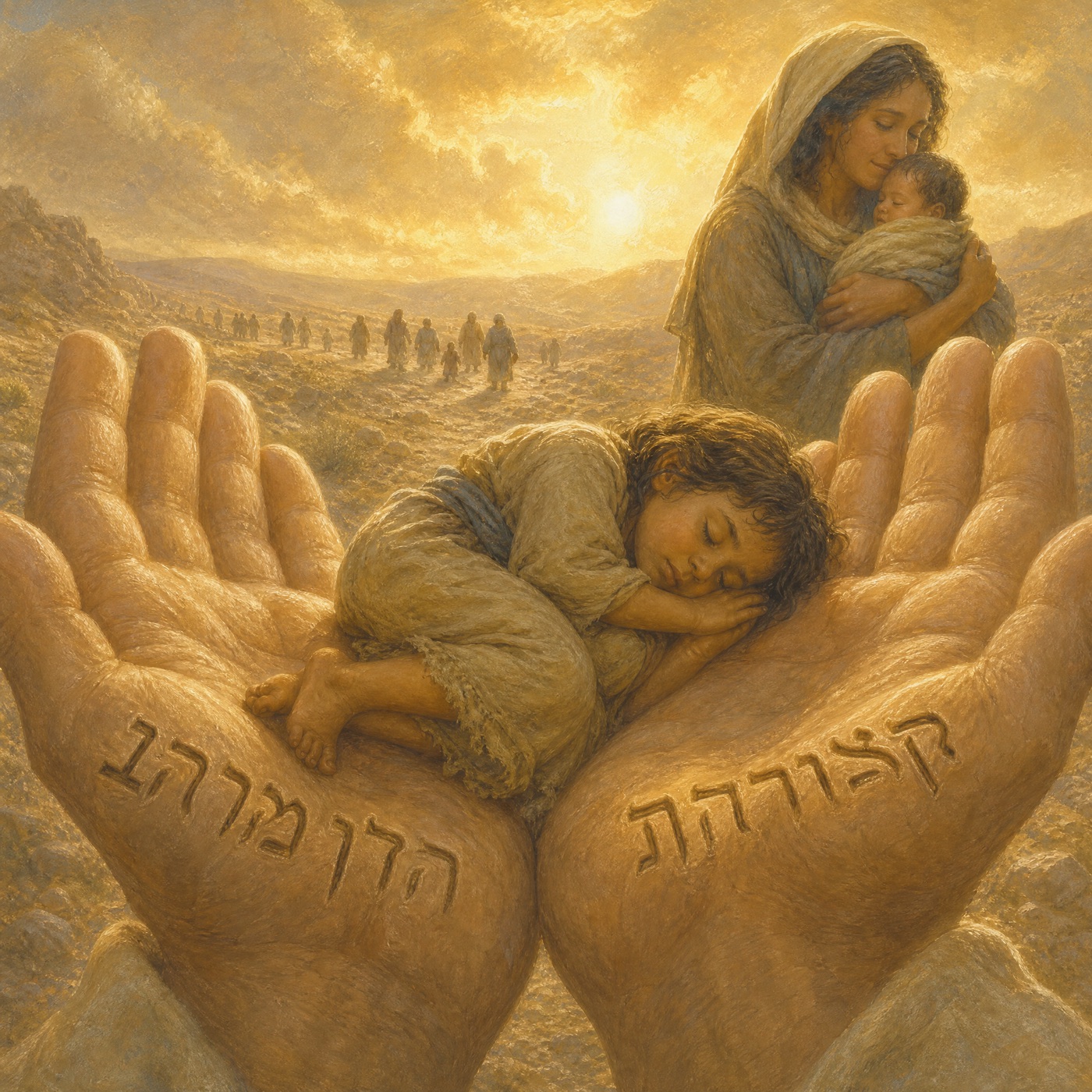
I have carved you on the palms of my hands.
Your walls are always in front of my eyes."
Some people write on their hands
so they won't forget their spelling words.
By bath time it is a blue smudge.
(Ink washes off. Carving does not.
A carving is cut in deep, the way a stonecutter
chisels a name into rock.)
So the broken walls of Jerusalem,
lying in the weeds,
were not lost to God for one minute.
He kept them where a person looks a hundred times a day,
right on the inside of his hands.
"Your builders are hurrying," God said.
"Your children are coming home."
And they did come home.
Years later Nehemiah and his workers
put the walls of Jerusalem back up
in fifty-two days.
But a promise carved on God's hands
was still a picture in a song.
Not one person had ever seen those hands.
Nehemiah's walls stood in the sun and rain
for more than four hundred years,
and still those hands stayed out of sight.
Then one night in Bethlehem
there was another mother
holding another baby close,
and she was never going to forget him.
This baby was God's own Son,
God come close, with hands people could see and hold.
He grew up with a carpenter's hands,
rough from cutting wood.
When he was grown,
soldiers drove nails through those hands
into a wooden cross,
and there he died.
On the third day he stood among his frightened friends,
alive.
"Look at my hands and my feet," he said.
"It is I myself."
Jesus still had the marks,
cut deep, to stay.
God's people were carved there for good.
···