The Joy of Jesus Bible
The Little Lamb and the King Who Wept
2 Samuel 11-12 · brokenness rescue
In the spring, when kings went out to war, King David stayed home and sent his general, Joab, instead.
One evening, walking on the palace roof, David saw a very beautiful woman.
"That is Bathsheba," a servant told him, "the wife of Uriah."
Uriah, one of David's bravest soldiers, was away at the war. A husband and wife promise to be faithful, to belong to each other and to no one else. David knew that. He sent for Bathsheba anyway and took her as if she were his own wife.
Weeks later Bathsheba sent word: "I am going to have a baby." It was David's baby.
David's heart thumped. He called Uriah home from the battle. "Go home, Uriah," he said, very friendly. "Sleep in your own bed."
But Uriah slept on the palace doorstep with the guards. "My friends are sleeping in tents," he said. "How could I go home to my own bed? I will not do it!" Even after David got him drunk, Uriah went back to the doorstep.
So David did something far worse. He sent Uriah back to Joab carrying a letter: "Put Uriah at the front, where the fighting is hardest. Then pull back so he is killed." Joab obeyed, and Uriah was killed. Bathsheba cried for her husband. Then David married her, and she had a baby boy.
But God had seen everything. He sent the prophet Nathan with a story.
"There were two men," said Nathan. "One was rich, with more sheep than he could count. The other was poor and had nothing but one little lamb. It ate from his plate and slept in his arms like a daughter. When a visitor came, the rich man kept his own sheep, took the poor man's lamb, and served it for supper."
David jumped up, red in the face. "As surely as the LORD lives, that man deserves to die!"
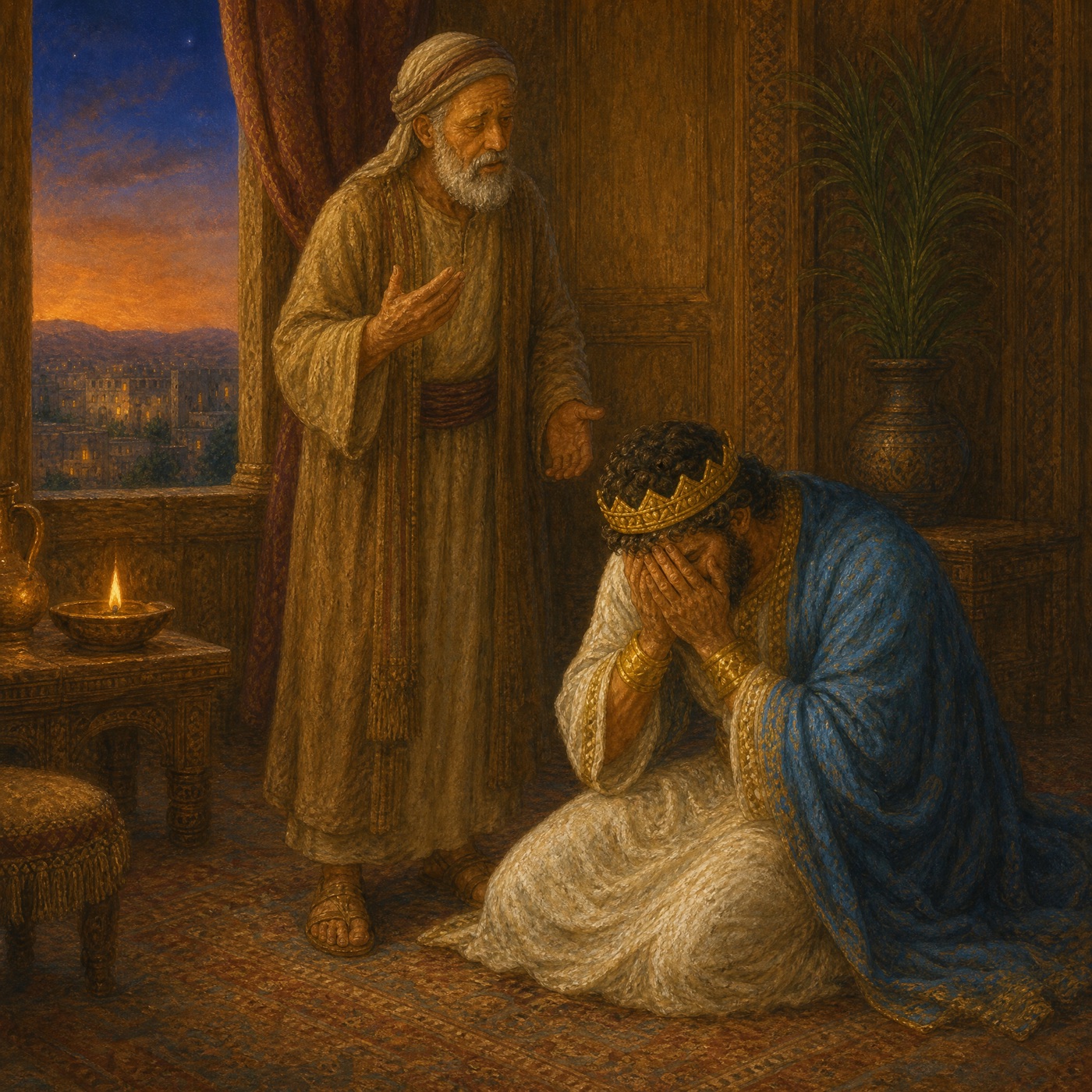
"You are the man," said Nathan. "You had Uriah killed, and you took his wife."
David sank down. "I have sinned against the LORD."
"The LORD has taken away your sin," said Nathan. "You will not die. But because you have treated the LORD as if he did not matter, the baby born to you will die."
The baby grew sick. For seven days David would not eat. He lay on the floor and begged God to let his son live. On the seventh day, the baby died.
David got up, washed, worshiped in the house of the LORD, and ate. "Why are you eating now?" his servants asked.
"While he was alive, I fasted and wept," he said. "Now I cannot bring him back. One day I will go to him."
Later God gave David and Bathsheba another son, Solomon, and sent Nathan to give him a second name: Jedidiah, which means "loved by the LORD."
God had taken David's sin away. But David's tears could not pay for what he had done, and they could not bring Uriah back. Even David, the man after God's own heart, needed rescuing.
King after king sat on David's throne, and every one of them went wrong somewhere. But God had promised David a Son whose kingdom would never end, and God's plan for that Son was stranger than anyone guessed. He would never take a poor man's lamb. He would be the Lamb.
One day, out at the Jordan River, John the Baptist saw him coming. "Look!" John called. "The Lamb of God, who takes away the sin of the world!"
It was Jesus, born in David's own town, from David's own family.
···