The Joy of Jesus Bible
The Day a Whole City Wept Over a Book
Nehemiah 8 · gods heart
Less than a week after the last gap in the wall was closed, the builders hung up their swords. Early one morning, people poured in from Jerusalem and the towns around it and packed the square by the Water Gate: men, women, and every child old enough to understand.
"Ezra!" they called. "Bring out the Book of the Law of Moses!"
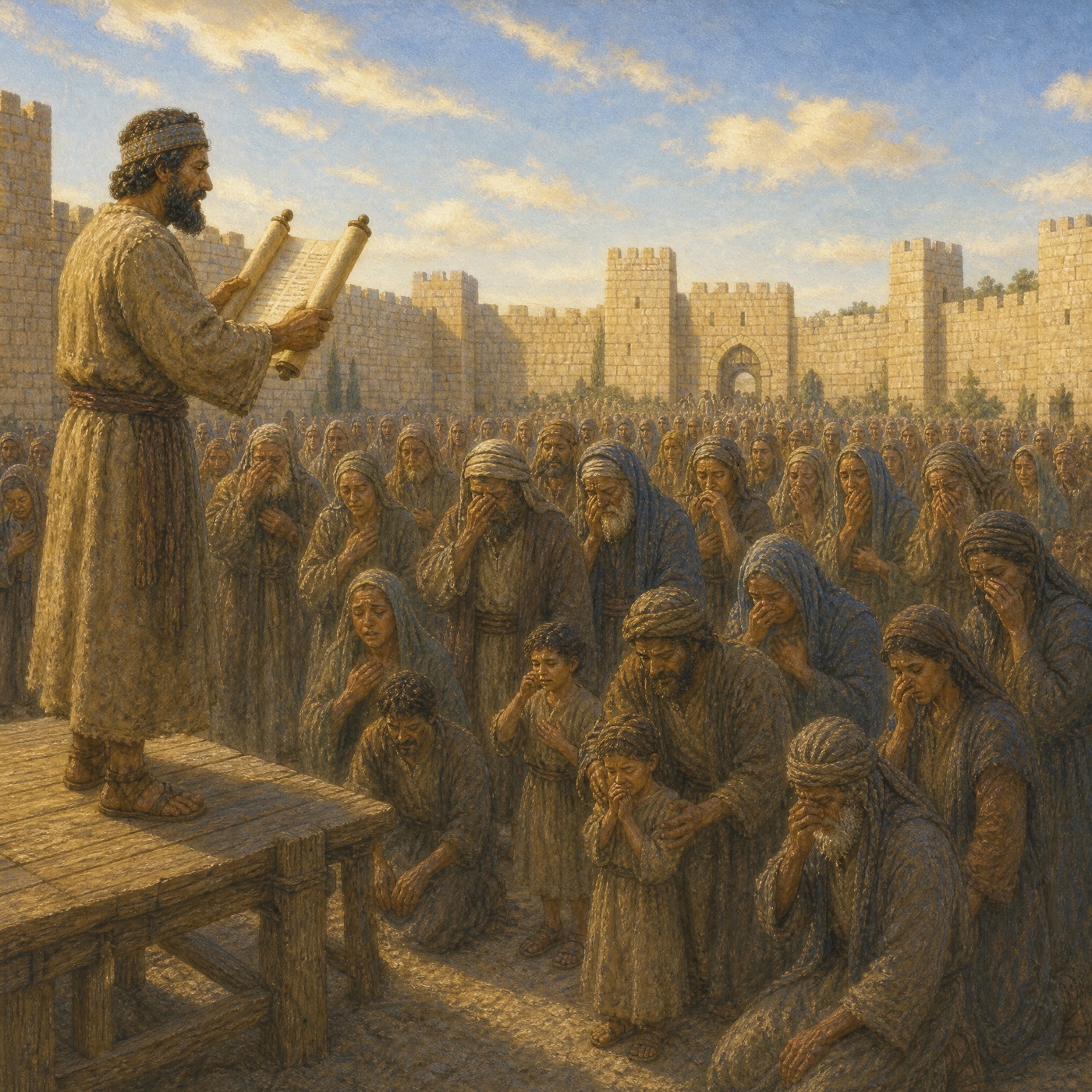
Ezra was a priest and a scribe. (A scribe copied God's words out by hand, letter by letter.) He carried out the scroll and climbed a tall wooden platform built just for this day, high enough for the back rows to see.
He unrolled the Book, and the whole crowd stood up at once. Thousands of sandals scuffed on the stones.
"Praise the LORD, the great God!" Ezra cried.
"Amen! Amen!" the people shouted, lifting their hands. Then they bowed with their faces to the ground.
Ezra read from first light until noon. (That is longer than a morning of school.) Levites, the temple helpers, went up and down the rows. "This part means this," they explained, making the old words plain.
The people heard how God had carried their families out of Egypt and asked them to love him with all their hearts. They heard how often their families had turned away anyway, and how many of God's laws they themselves had never kept.
Then the whole square began to cry. Grown men wiped their beards. Mothers sobbed into their scarves.
Nehemiah the governor stood with Ezra and held up his hands. "This day is holy to the LORD your God. Don't mourn! Don't cry! Go home and eat the best food and drink something sweet, and send some to anyone who has nothing ready. Don't be sad, for the joy of the LORD is your strength."
(Of all the things a governor could say to a weeping crowd, "Go home and have a feast" must have been the most surprising.)
The Levites moved through the crowd, hushing people the way a mother hushes a baby. "Shh. Today is holy."
So the whole city feasted. People carried full plates to neighbours with empty tables, and there was great rejoicing, because now they understood the words.
The next morning the family leaders came back to study, and found something in the Book. In the seventh month, God's people were to live for a week in huts made of branches, to remember the tents of the desert.
"That's this month!" someone said.
Out to the hills they went for olive, myrtle, and palm branches. They built huts on flat roofs, in courtyards, in the courts of God's house, and by the gates. (For a week, the whole city slept under leaves.) Every day of the feast, Ezra read to them from the Book. Not since Joshua led them into the Promised Land had God's people kept the feast like this, and their joy was very great.
The Levites explained every line that day, and still the Book kept pointing past itself, to someone who had not come yet. Every autumn the huts went up again, and God's people kept waiting for the one God had promised.
More than four hundred years later, two friends walked away from Jerusalem with sad faces. Their teacher had been killed on a cross, and this was the third day. A stranger fell into step beside them. Starting with the books of Moses, he made the old words plain and showed them what the Scriptures said about himself. At supper he broke the bread, and they knew him.
"Weren't our hearts burning," they said, "while he opened the Scriptures to us?"
It was Jesus, alive, the one the whole Book had been about all along.
···