The Joy of Jesus Bible
New Every Morning, Even in the Dark
Lamentations 3:19-33 · promise keeping
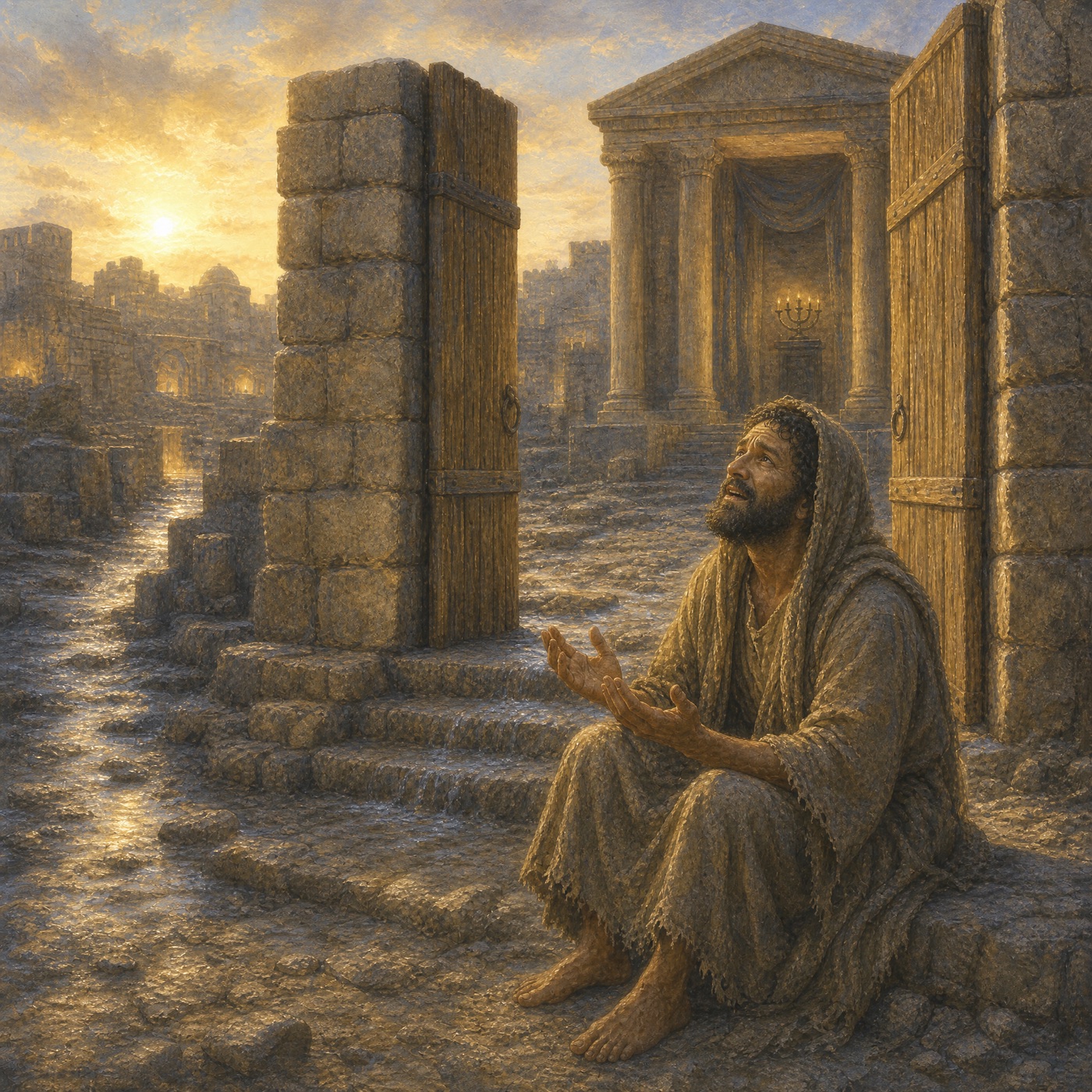
The fires in Jerusalem had gone out,
but the smoke still hung over the hill.
The army of Babylon had broken the walls,
burned God's temple to the ground,
and marched most of the people far away.
Many had been killed in the fighting.
Many more had died of hunger.
The poet who had cried over the empty city was still there,
sitting in the ashes, still writing.
(This time he gave every letter of the alphabet three verses instead of one,
as if one were no longer enough.)
"Remember how I suffer," he wrote to God.
"I wander with no home.
Everything tastes like wormwood."
(Wormwood is a plant so bitter
it makes your whole face pucker up.)
"I think about it all day long,
and it pushes me down into the dust."
Then, in the middle of the ashes,
he stopped crying long enough to think of something else.
He wrote it slowly,
the way a person writes a thing he means to keep:
"But this I call to mind,
and so I have hope.
The LORD's love never stops.
His mercy never runs out.
It is new every morning.
Great is your faithfulness, O LORD!"
The man knew about mornings.
When his people walked in the desert long ago,
God's bread lay on the ground every morning,
fine and white like frost.
Nobody could keep it overnight,
except on the night before the Sabbath.
(Anyone who tried found worms in it by breakfast.)
Yesterday's bread was for yesterday.
Every morning, God sent more.
"The LORD is my portion," the man said to himself,
"so I will wait for him."
(A portion is your share at dinner,
the plate with your name on it.)
His house was gone. His city was gone.
But nobody could take away his share,
because his share was God.
"The LORD is good to those who wait for him,
to anyone who keeps looking for him.
It is good to wait for the LORD to save."
So he sat still in the dust.
He wrote that a person in trouble
can put his face down in the dirt,
can turn his cheek to the one who hits him,
can let people pour insults over him,
and still keep hoping.
"The Lord will not turn us away forever.
Even when he sends sorrow,
he will be kind again,
because his love is so great.
It gives him no joy to make people cry."
The next morning the walls were still broken.
And the morning after that, and the one after that.
Mercy came new each morning, the way the bread had,
but even new mercy every morning still ended in another night,
and the man could not bring back one person who had died.
Almost fifty years went by
before God's people came home and began to rebuild,
and even then they kept watching for something more,
a sunrise that could bring back the dead.
Hundreds of years later, in that same city,
another man was struck on the cheek
and covered with insults,
and he did not hit back.
He died on a cross outside the walls,
and his friends laid him in a dark tomb
and rolled a stone across the door.
Early on the third day,
as the sun came up over Jerusalem,
the women who loved him found the stone rolled away.
Jesus was alive,
and the newest morning the world has ever seen
had begun.
···