The Joy of Jesus Bible
The Quiet Girl Who Became Queen
Esther 2 · gods heart
God answered Daniel's prayer, and many of his people went home to Jerusalem. Many others stayed scattered across Persia. Sixty years later one of them, a man named Mordecai, sat every day at the gate of the king's palace in Susa. (The palace gate was where officials did the king's business, like an office with no roof.)
Mordecai had a young cousin named Esther. When her father and mother died, he took her home and raised her as his own daughter.
The king, Xerxes, had sent his queen away for good years before, because Queen Vashti had refused to come when he called her. Now his servants had an idea.
"Search the whole kingdom for beautiful young women," they said. "Bring them to the palace, and the one who pleases the king can be queen instead of Vashti."
"Good idea," said the king. (Xerxes usually said yes to the last idea he heard.)
So Esther was taken to the palace with all the others. Before she went, Mordecai told her, "Don't tell anyone you are one of God's people." Esther kept the secret.
The women were put in the care of Hegai, the king's servant. The moment he met Esther, he liked her. "Give this one seven maids," he said, "and the best rooms in the house."
Then came a full year of beauty treatments: six months of oil of myrrh, then six months of perfumes. (Twelve months! By the end, a girl could probably be smelled from the next street.)
Every day of that year, Mordecai walked up and down outside the women's courtyard. "How is Esther?" he asked. "Is she all right?"
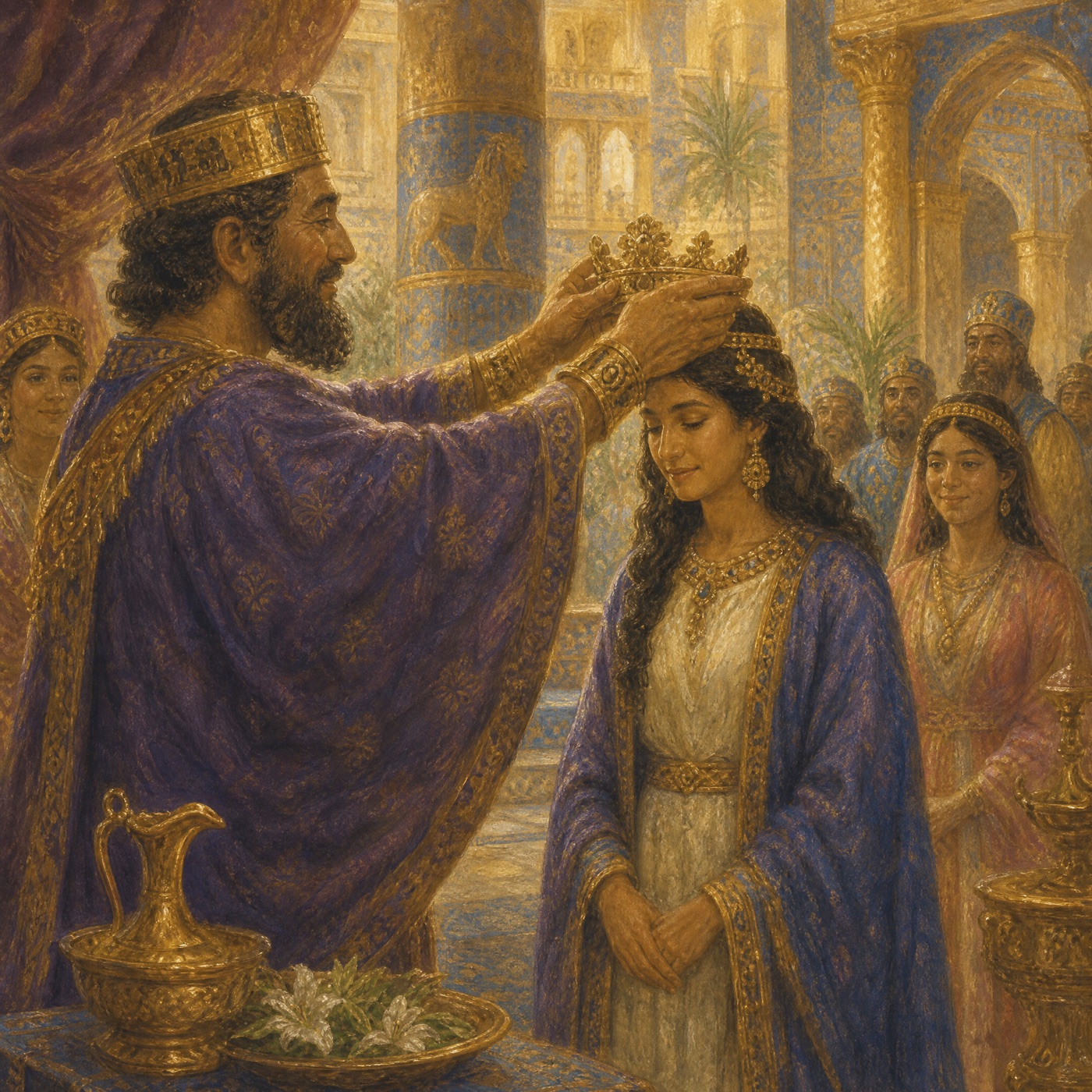
When Esther's turn came to go to the king, she asked for nothing except what Hegai advised. Everyone who saw her liked her, and King Xerxes loved her more than all the other women. He set the royal crown on her head and made her queen. Then he threw a great feast in her honor. And still Esther told no one who her people were.
Not long after, Mordecai was sitting at the gate when he heard two of the king's doorkeepers, Bigthan and Teresh, muttering. They were angry with the king, and they were planning to kill him.
Mordecai sent word to Esther, and Esther passed the warning to the king and told him it came from Mordecai.
It was true. The king had both doorkeepers killed. It was all written in the king's record book, and then the book was shut. No one thanked Mordecai.
Nobody in this whole chapter says one word about God. (The book of Esther never writes his name, not once. He was there anyway, putting an orphan on a throne and her cousin at exactly the right gate.)
But a crown from King Xerxes could slip. He had taken one off Vashti's head, and he could take one off Esther's. Mordecai loved Esther, but he could not bring her parents back.
Persian kings rose and fell, then Greek kings, then Roman emperors. God kept working where no one could see, and his scattered people waited for him to show his face.
Then another came looking for God's children, the way Mordecai had paced outside that courtyard. He did not wait at the gate. He came all the way into the world, God's own Son. The night before he died, he told his friends, "I will not leave you as orphans. I will come to you."
In Jesus, the God whose name never made it into Esther's book came close enough to touch.
···