The Joy of Jesus Bible
The Hand That Wrote on the Wall
Daniel 5 · brokenness rescue
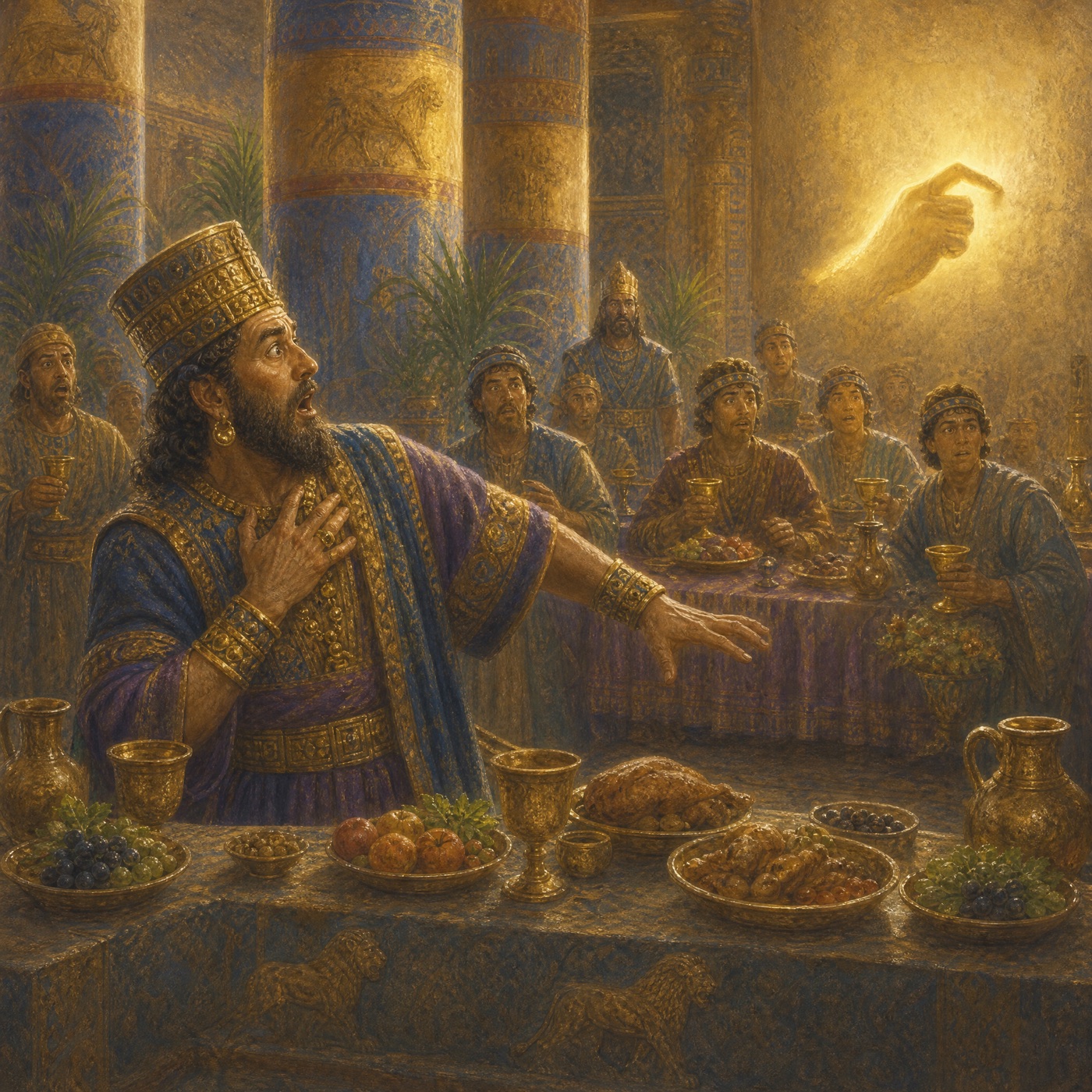
Years after King Nebuchadnezzar ate grass in the fields and looked up to heaven, a king named Belshazzar sat on Babylon's throne. One night he threw a feast for a thousand of his lords.
Halfway through, Belshazzar had an idea. "Bring the gold and silver cups from Jerusalem!" he called.
These were the cups Nebuchadnezzar had carried off from God's temple long ago, made for worshiping the one true God. Servants hurried in with armfuls, and the king and his lords and his wives drank from them and sang to their gods of gold and silver, bronze and iron, wood and stone.
Across from the lampstand, the fingers of a human hand appeared. There were fingers and nothing else, no arm, no body, scratching letters into the plaster wall.
Belshazzar's face went white. His legs gave way, and his knees knocked together. (A minute earlier he had been laughing and raising his cup.)
"Bring the wise men!" he shrieked. "Whoever reads this writing will wear purple and a gold chain and be third ruler in the kingdom!"
In came the magicians and star-watchers. They squinted and tipped their heads one way and then the other. Not one of them could read a word.
Then the queen came in. "O king, live forever!" she said. "Don't look so pale. There is a man in your kingdom with the spirit of the holy God in him. He explained dreams for Nebuchadnezzar. Send for Daniel."
So old Daniel came, who had served God in Babylon since he was a boy. The king made him the same offer: the purple, the chain, the third seat.
"Keep your gifts," said Daniel, "or give them to someone else. But I will read the writing for you."
First he reminded the king of something he already knew. "When Nebuchadnezzar's heart grew proud, God sent him out to eat grass like an ox until he learned that God rules. You knew all this, Belshazzar, and still you did not humble your heart. You drank from God's own cups and praised gods that cannot see or hear, and you have not honored the God who holds your every breath."
Then Daniel turned to the wall. "MENE, MENE, TEKEL, PARSIN."
(Those were the names of weights, the kind a shopkeeper set on his scales to weigh silver.)
"Mene: God has counted the days of your kingdom and brought it to an end. Tekel: you have been weighed on the scales and found too light. Parsin: your kingdom is split and handed to the Medes and the Persians."
Belshazzar kept his word. Daniel got the purple, the gold chain, and the third seat in Babylon. It was the shortest job he ever had.
That very night Belshazzar was killed, and Darius the Mede took his kingdom.
The hand never came back, but its words stayed true. Set any king on God's scale alone, or any soldier or shepherd or child, and it would swing up light. King after king came and went, and every one of them swung up light. Still no one came who weighed enough.
One day a different King stood in a Roman governor's courtyard. Soldiers dressed him in purple too, as a joke, and over his cross they wrote words for everyone to read: THE KING OF THE JEWS. The night before, he had prayed about a cup his Father was handing him, a cup full of everything our wrongs deserve. Belshazzar drank from God's cups to show off. This King drank his to the bottom, so the people he loves never have to.
Jesus set his own weight on our side of the scale, and when God weighed him, nothing was missing.
···