The Joy of Jesus Bible
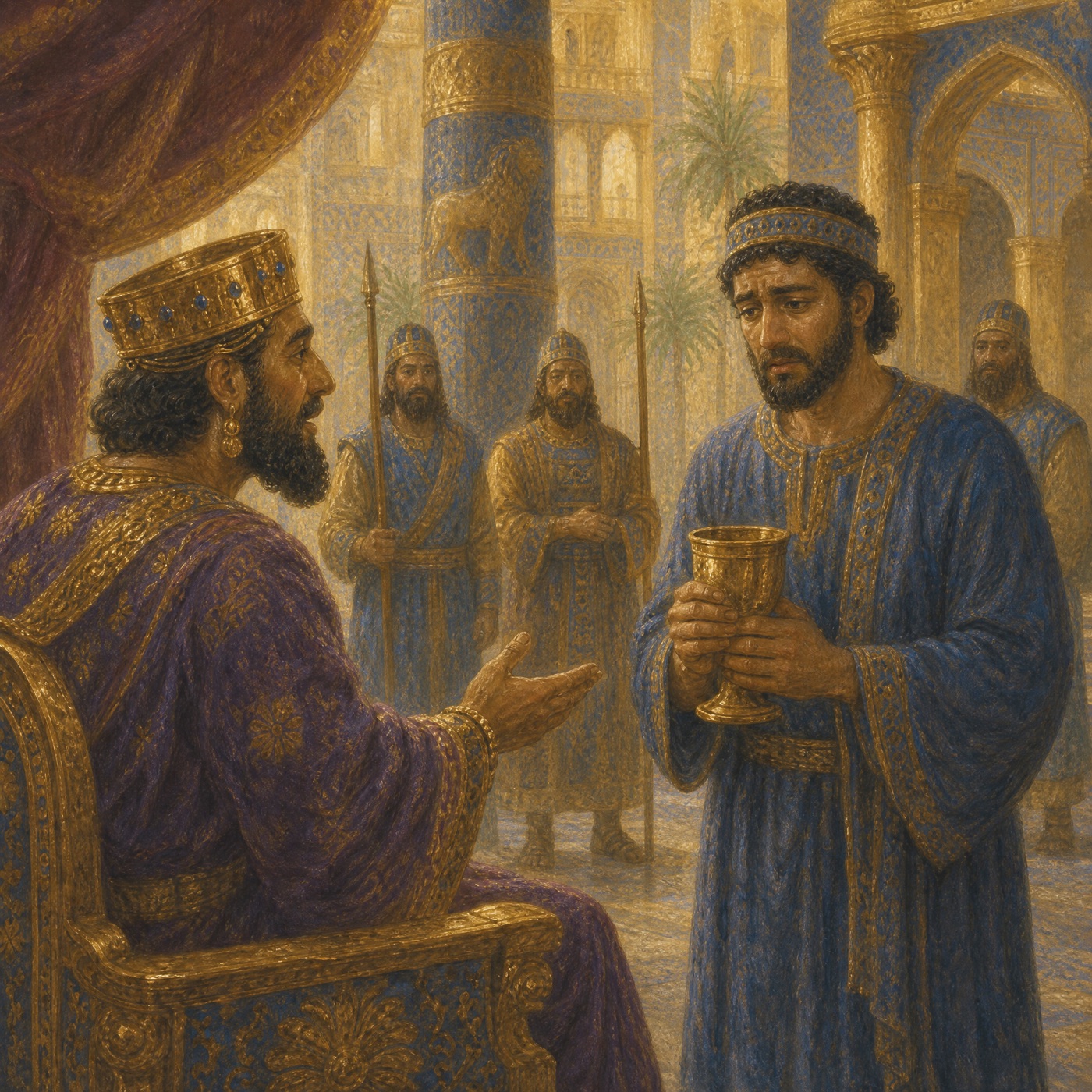
The Cupbearer Who Carried a Sad Face to the King
Nehemiah 1-2 · gods heart
Almost a hundred years after the old people cried over the new temple's floor, Jerusalem still had no wall.
Far to the east, in the palace at Susa, a Jewish man named Nehemiah served Artaxerxes, king of Persia. He was the king's cupbearer: he carried in the wine and tasted it first. (If anyone had poisoned the cup, the cupbearer would be the one to find out. An important job, and a nervous one.)
One day Nehemiah's brother Hanani arrived from Judah.
"How is Jerusalem?" Nehemiah asked.
"Bad," said Hanani. "Our people there are in trouble, and their neighbours laugh at them. The wall is broken down, and the gates are burned."
Nehemiah sat down and cried. For days he went without food and prayed. "God of heaven, your people have sinned against you, and so have I and my family. But you promised Moses that if your scattered people turned back to you, you would bring them home. Hear me. Make the king kind to me."
Then he waited four months.
One spring day Nehemiah carried the wine in, with the queen sitting beside the king. He had never once looked sad in front of the king. (In that palace, a gloomy face could cost a servant his job, or worse.) Today he could not hide it.
"Why is your face so sad?" asked the king. "You are not sick. This must be sadness of heart."
Nehemiah was terrified. "May the king live forever! How can my face not be sad, when the city where my ancestors are buried lies in ruins?"
"What do you want?"
Right there, between the question and the answer, Nehemiah prayed to the God of heaven. (A very short prayer. The king was waiting.) Then he said, "Send me to Jerusalem, so I can build it again."
The king did not say no! He only asked how long Nehemiah would be gone. Then Nehemiah asked for letters to the governors along the road and timber from the royal forest for beams and gates. The king gave him all of it, and horsemen besides, because, Nehemiah said, "the good hand of my God was on me."
Three nights after he reached Jerusalem, Nehemiah got up in the dark and told no one. He rode past the Dragon Spring to the Dung Gate. (Yes, the Dung Gate. That was where the rubbish went out.) Near the King's Pool there was no room for his animal to get through the rubble, so he went up the valley instead, studying the broken wall in the dark.
Then he gathered the leaders. "Look at the trouble we are in. Come, let us build the wall, so no one laughs at us anymore!"
"Let's get up and build!" they said. And they started.
Nehemiah could pile the stones back up around his ancestors' graves, and God's good hand helped him. But he could not open one grave. Everyone buried in that city stayed buried, and one day Nehemiah died too.
God's people went on burying their mothers and fathers, year after year. They held on to Isaiah's old promise that one day God would swallow up death forever.
Then another man stood crying near a grave, where his friend Lazarus had been dead for four days. He called into the cave, "Lazarus, come out!" and Lazarus walked out alive. Not long after, soldiers nailed this man to wooden beams outside Jerusalem's wall, and he died and was buried too.
On the third day his own grave was empty. Jesus had come to the city of graves to open them.
···