The Joy of Jesus Bible
The Baby Nobody Wanted and the King Who Did
Ezekiel 16 · gods heart
The glory of God had gone out of the temple and stopped on the hill east of Jerusalem, but the people there hardly noticed. "This is God's own city," they said. "He will never let it fall." Far away in Babylon, by the river Kebar, the exiles said it too, and kept asking Ezekiel when they could go home.
So God gave Ezekiel a hard story to tell them.
"Once," Ezekiel began, "a baby girl is born, and on the day she is born, no one wants her."
No one cuts the cord. No one washes her or wraps her in cloths. No one even rubs her with salt. (In those days people rubbed a newborn's skin with salt to keep it healthy. It sounds like getting her ready for supper, but it was a kindness.) Instead, someone carries her out to an open field and leaves her in the dirt.
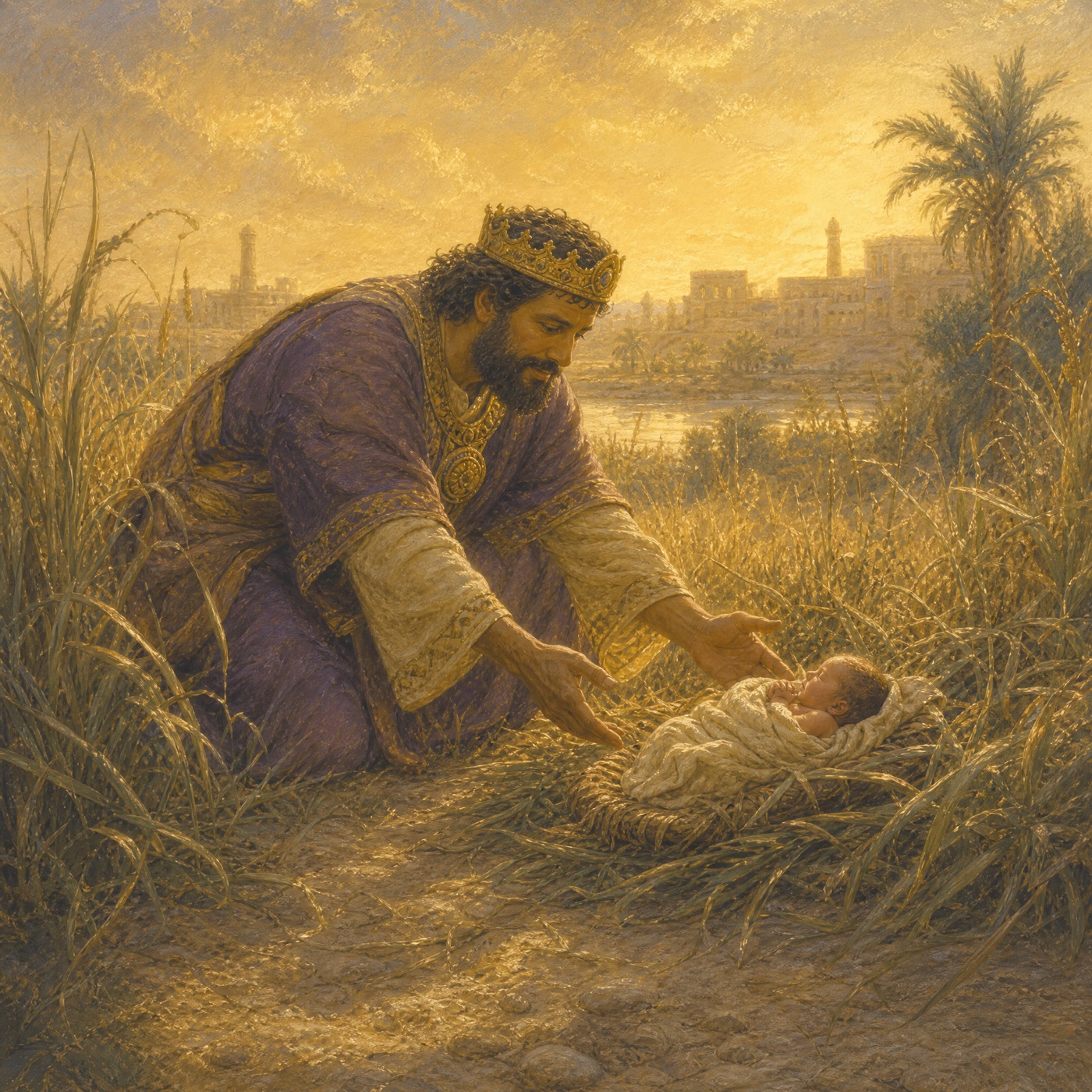
Then a King comes walking by. He sees her kicking in the grass, still messy from being born, and he stops.
"Live!" he says to her. And again: "Live!"
She lives, and grows up in that field like a wildflower, with nothing to wear but the wind.
Years later the King passes by again and sees that she is old enough to marry. He spreads the corner of his cloak over her. (That was how a man said, "I will take care of you for the rest of your life.") He makes her a wedding promise, and he says, "You are mine."
He washes her and rubs her with sweet oil. He dresses her in embroidered cloth and soft leather sandals. He gives her bracelets, a necklace, a ring for her nose, and a crown for her head. She eats the finest bread with honey and oil, and people in every country talk about her beauty.
"You trusted in your beauty," the King says, "and forgot the days when you lay in the field."
She takes the gold and silver he gave her and melts them into idols. She breaks her promise to be the King's wife and no one else's, and runs after other lovers: Egypt, then Assyria, then Babylon. She even takes her own sons and daughters and has them killed as gifts to the idols.
Down by the river, the exiles had stopped asking questions. Everyone knew who the bride was. She was Jerusalem. She was them, and the King was God.
The King would hand her over to those lovers, and they would tear away every gift he gave her.
"Yet I will remember my promise," says the King, "the one I made with you when you were young. I will make a promise with you that lasts forever, and I will cover over everything you have done."
Ezekiel's story stopped there, on a promise. Jerusalem fell, as he said, and years later the exiles came home. But the bride kept wandering, and the lambs at the temple could not cover what she had done. Someone would have to pay for it.
Hundreds of years went by, and the promise waited.
Then the King came himself, a Bridegroom looking for his runaway bride. (He called himself that, and said no one could be sad at a wedding while the bridegroom was there.) Once he set a gold crown on his bride's head. Now he let soldiers push a crown of thorns onto his own, and he died to cover everything she had done. On the third day he was alive again.
Jesus is the King who came back to the field.
···