The Joy of Jesus Bible
I Know My Rescuer Is Alive
Job 19:23-27 · promise keeping
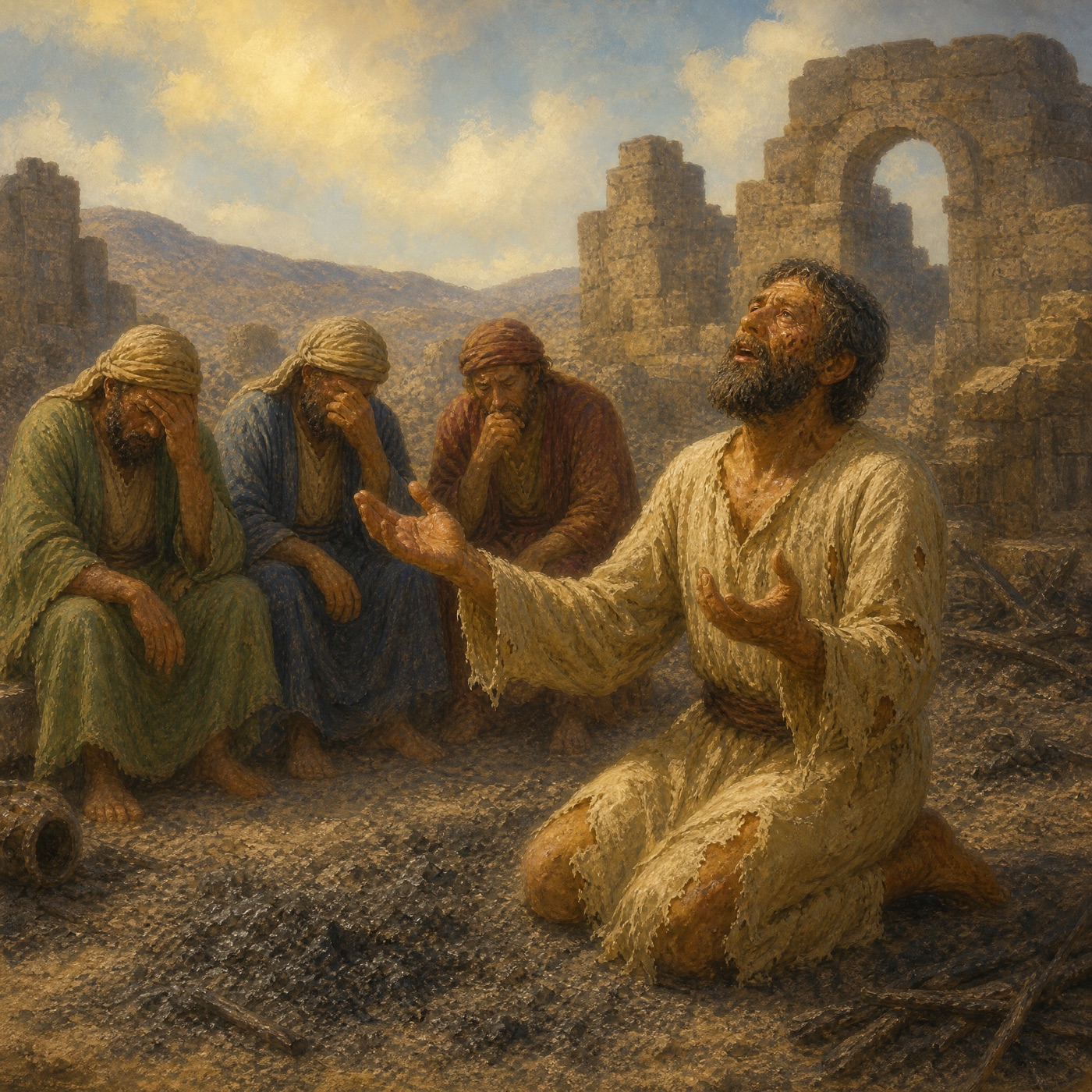
Job sat on the ash heap outside the town,
still covered in sores from head to foot,
and Bildad was making another speech.
"The lamp of a wicked man goes out," said Bildad.
"His name is wiped off the earth.
He has no children left."
Everyone knew who he meant.
Job's ten children had died
when a great wind knocked their house down on top of them,
all on one terrible day.
Job lifted his head.
"How long will you keep hitting me with words?
Ten times now you have told me off!"
Then Job told them about his days.
"God has fenced in my road, and I cannot get through.
My brothers stay far away.
My friends act as if I am not here.
My own wife cannot stand my breath.
When I get up, the boys in the street laugh at me.
I am skin and bones.
I have escaped by the skin of my teeth."
(Teeth have no skin at all.
That is how close Job came to nothing.)
"Have pity on me!" he begged them.
"Have pity, my friends!"
His friends only waited for their turn to talk.
So Job wished for something else.
"Oh, I wish my words were written down!
Written in a book!
Cut into rock with an iron pen
filled in with lead,
to stay there forever!"
(Carving rock is slow work,
so people only carve what they mean forever.
Job got half his wish:
his words went into a book,
and here they are.)
This is what he wanted carved:
"I know that my Redeemer is alive,
and at the end he will stand up on the earth.
After my skin has been destroyed,
still, in my own body, I will see God.
I will see him for myself.
My own eyes will look at him,
and not a stranger's eyes.
How my heart aches for that day!"
In Job's time, a redeemer was your closest relative, the family's rescuer,
the one who had to come running when the family was in trouble.
He bought back the field you had lost.
He paid what you owed.
He stood up and spoke for you when no one else would.
Job's friends would not stand up for him.
But Job knew there was a Redeemer who would,
and that he was alive.
Even after Job died and his skin was gone,
he would see God with his own eyes,
in his own body.
Job never found out how his Redeemer would come.
He could only say "I know," and wait,
even after God answered him out of a storm
and gave him a long, full life again.
Then, a very old man, he died.
People read his words long after he was gone
and wondered who his Redeemer could be.
Then another man was laughed at in the street
and left alone by his friends.
He died on a cross,
and they laid his body in a tomb cut into the rock.
On the third day he stood up alive.
One of his friends, Thomas, had missed seeing him. "Unless I see the nail marks in his hands," Thomas said, "I will not believe it."
A week later Jesus came and held out his hands.
"Put your finger here," he said. "See my hands."
Thomas looked at him with his own eyes, not a stranger's.
"My Lord and my God!"
Job's Redeemer had walked out of the rock alive.
And at the end, Job will stand up too, in his own body,
and see him.
···