The Joy of Jesus Bible
A Prophet Like Me, Only Greater
Deuteronomy 18:15-19 · promise keeping
Moses was still talking. He had just told the people to tie God's words onto their hands and write them on their doorposts, and he had plenty more to say. (Most of the book of Deuteronomy is one long goodbye speech. When Moses said "And another thing," he could mean three more chapters.)
Over in the promised land, the nations had their own ways of finding out what to do. They paid fortune-tellers. They watched the sky for signs. They went to people who claimed they could talk to the dead.
"Don't copy them," Moses said. "Not any of it. The LORD hates those things."
That left a hard question hanging over the camp. Moses was a hundred and twenty years old. Once he was gone, who would tell them what God said?
Moses reminded them of a day at Mount Sinai. The grown-ups in that crowd had been children then, but nobody forgets a mountain on fire.
God had come down on the mountain in fire. Smoke rolled up from it as if the whole mountain were one enormous chimney. The ground shook, a trumpet blast grew louder and louder, and then God himself spoke, and every person heard his voice. The people backed away so fast they trod on each other's sandals.
"Moses, you go near and listen!" they begged. "Then come back and tell us. If we hear that voice again, or see that great fire, we will die!"
God did not scold them. He said to Moses, "They are right."
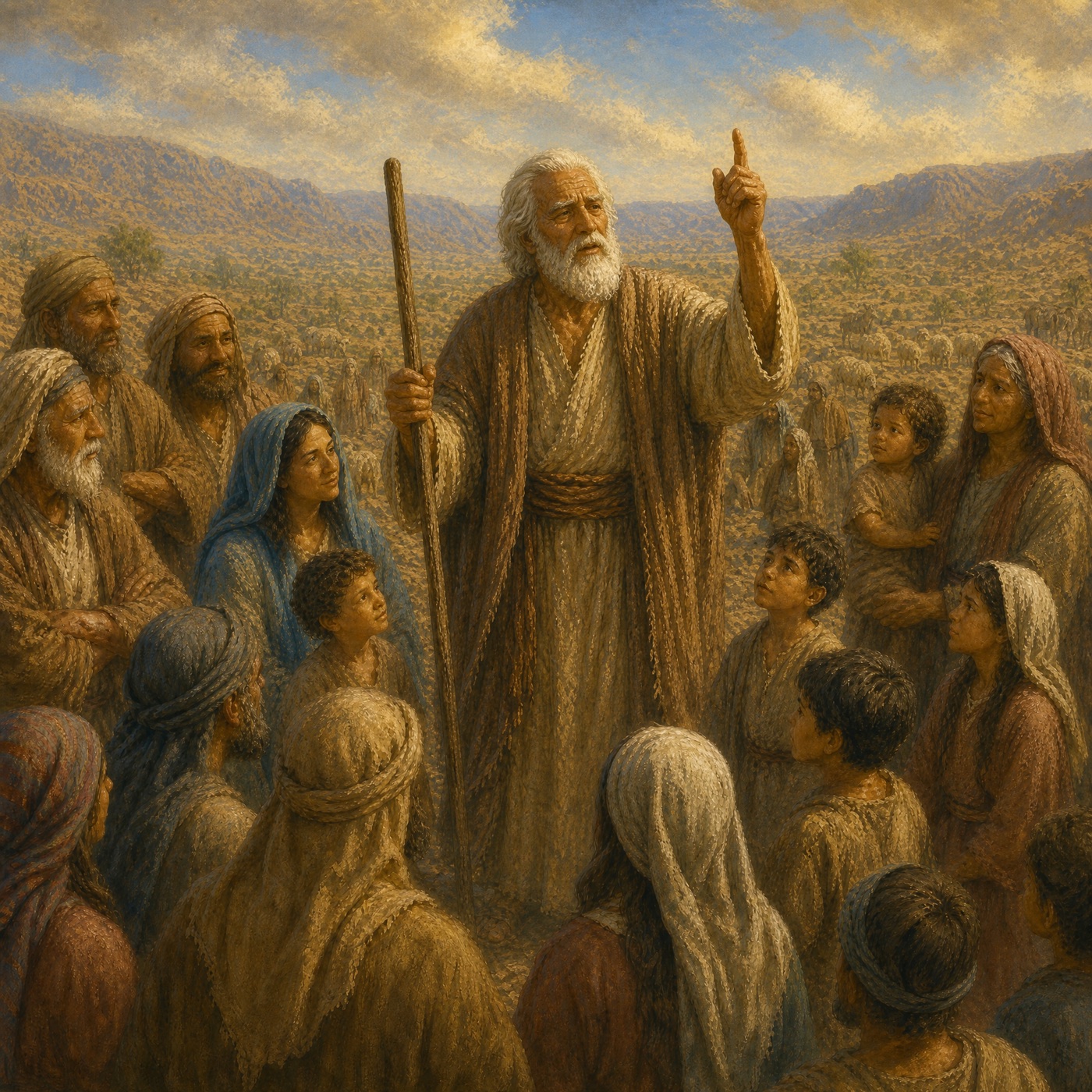
Then God made a promise, and now Moses passed it on. "I will raise up for them a prophet like you, from among their own brothers. I will put my words in his mouth, and he will tell them everything I command him. Anyone who will not listen to the words he speaks for me will have to answer to me."
(A prophet is a messenger from God. He hands on God's words the way a postman hands over a letter he did not write.)
Moses looked out at the crowd. "The LORD your God will send you a prophet like me," he said. "One of your own. Listen to him!"
Somewhere in that crowd, a boy probably looked sideways at his big brother and thought, Surely not HIM.
God also gave them a way to tell a true prophet from a false one. If a man said, "God told me this will happen," and it never happened, God had not sent him.
Moses could bring God's words down from the mountain. He could not make that fire any less frightening, and he could not stay.
Samuel came after Moses, and Isaiah, and Jeremiah, each with God's words in his mouth, and each one died. Hundreds of years later, people were still asking. "Are you the Prophet?" they said to John the Baptist. "No," said John.
Then another man came, one of their own brothers. He fed a hungry crowd in the wilderness with bread, and they cried, "This is the Prophet!" One day he climbed a mountain with three friends, and his face shone like the sun. Moses himself stood there talking with him. Out of a bright cloud came the voice from Sinai: "This is my Son, whom I love. Listen to him!"
The friends fell on their faces, terrified. He came and touched them. "Get up," he said. "Don't be afraid." When they looked up, they saw no one but Jesus.
···